自ら成長しようとする力
子どもは自ら成長しようとする力があります。
そのことについて「モンテッソーリ教育が見守る
こどもの学び」松浦公紀著には
『「歩く」「話す」は私たち大人が子どもに教えこんだでしょうか?
訓練したでしょうか?
そんなことはしていませんね。
大きな障害がない限り、子どもたちは歩くようになりますし、
話すようになります。
しかし、どの子どもも最初は、歩けない、話せない、全く無力の
状態で誕生します。
何かができるようになること=自立は子ども自身の力によってであり、
大人が教えこんで自立をさせるのではないのです。
つまり、子どもの内面には自立をしていくための力が誕生の時点から
備わっているのです。
ただ、その力は形となって現れていないというだけなのです。
モンテッソーリはこの教えられてではなく、自分で自立していこうとする力のことを
「自己開発力」とか「自己教育力」とか「自己成長発達力」と呼びました。
その力の発見と、それを土台に捉えることによって、モンテッソーリ教育法は
確率されていったのです。』
さて、モンテ室では子どもが自由にやりたい教具・教材を選んで取り組みます。
やりたい、興味がある活動に取り組んでいる表情は真剣です。
一部ですがその真剣な様子を紹介します。
Children have the power to grow on their own.
Regarding this, in the book Children’s Learning Observed by Montessori Education by Kiminori Matsuura, the following is written:
“Did we adults teach children how to walk or talk?
Did we train them?
No, we did not.
Unless there is a major disability, children eventually learn to walk and to speak.
However, every child is born completely helpless—unable to walk and unable to speak.
Becoming able to do something—independence—comes from the child’s own power.
It is not something that adults create by teaching them.
In other words, within the child already exists, from the moment of birth, the power that leads them toward independence.
It is simply that this power has not yet appeared in visible form.
Maria Montessori called this power—not something that is taught, but something that drives a child to become independent on their own—by names such as ‘self-development,’ ‘self-education,’ or ‘the power of self-growth and development.’
Through discovering this power and recognizing it as the foundation, the Montessori method of education was established.”
Now then, in the Montessori room, children freely choose the materials and activities they want to work with.
When they are engaged in activities they want to do or find interesting, their expressions are very serious and focused.
Here are a few examples showing that focused engagement.
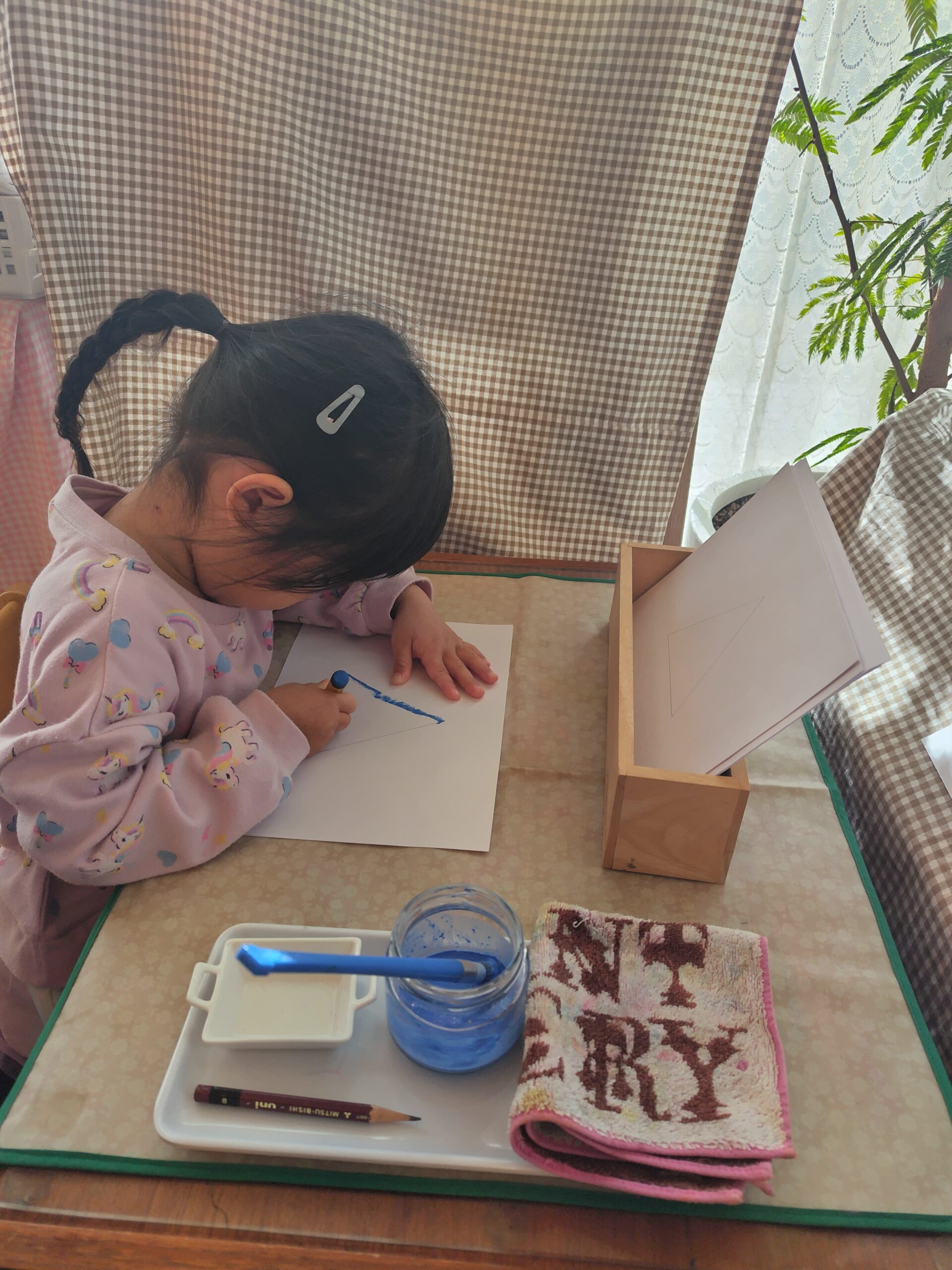
図形をクレヨンでなぞって絵の具で塗る
2歳児
Tracing shapes with crayons and coloring them
2 year old class
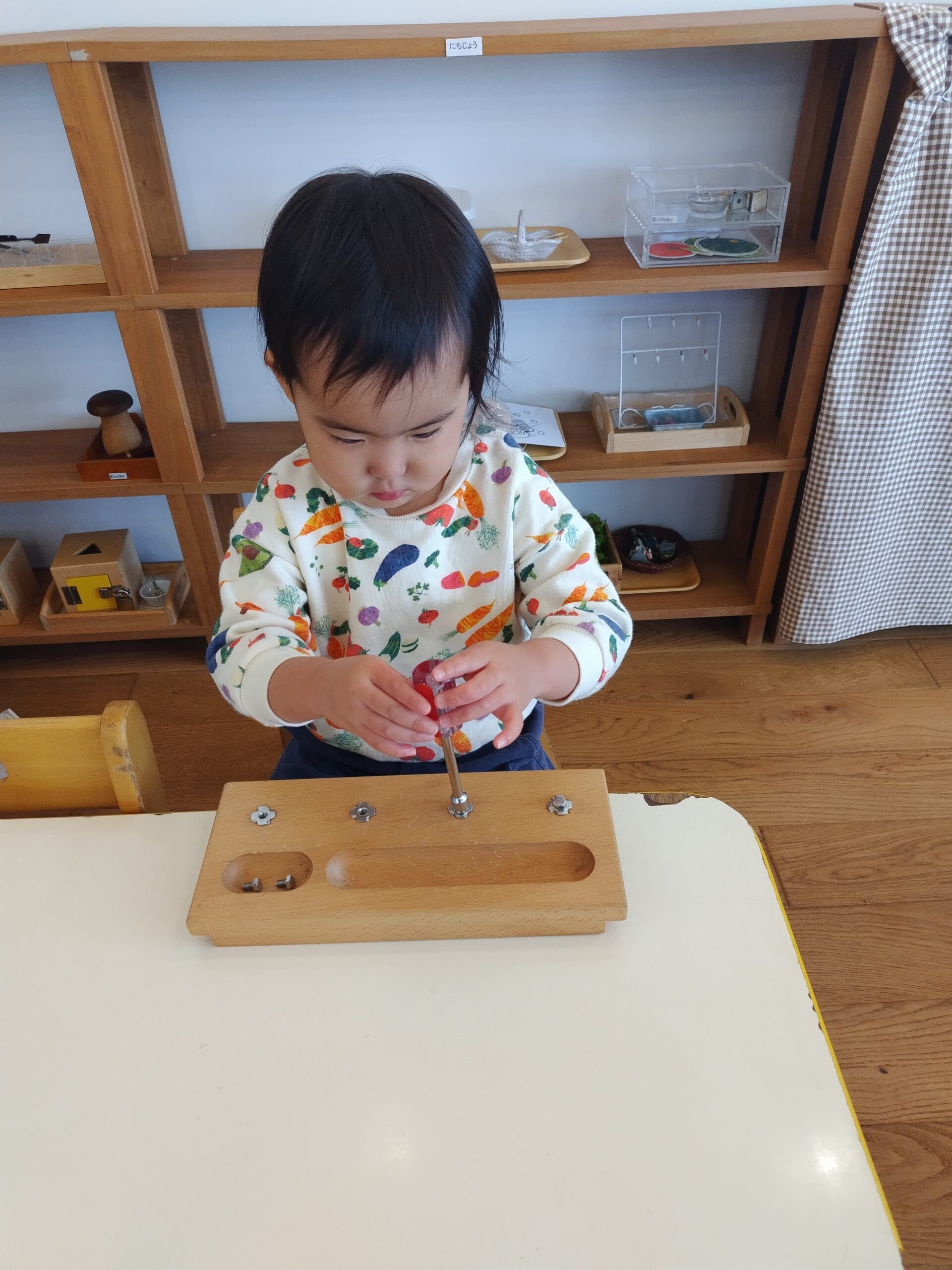
ねじまわし 2歳児
Turning screws 2 year old class
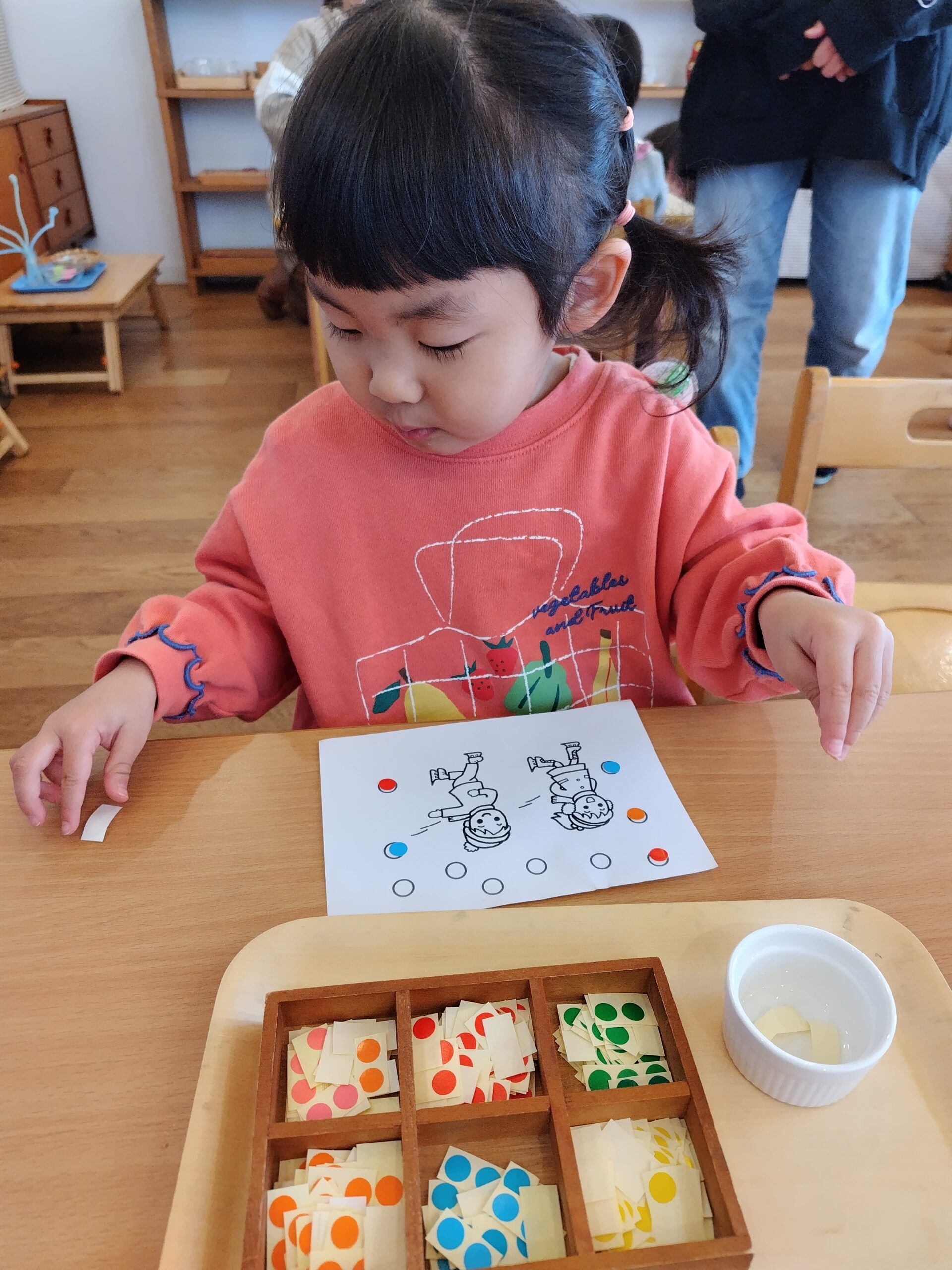
シール貼り 2歳児
Stickers 2 year old class
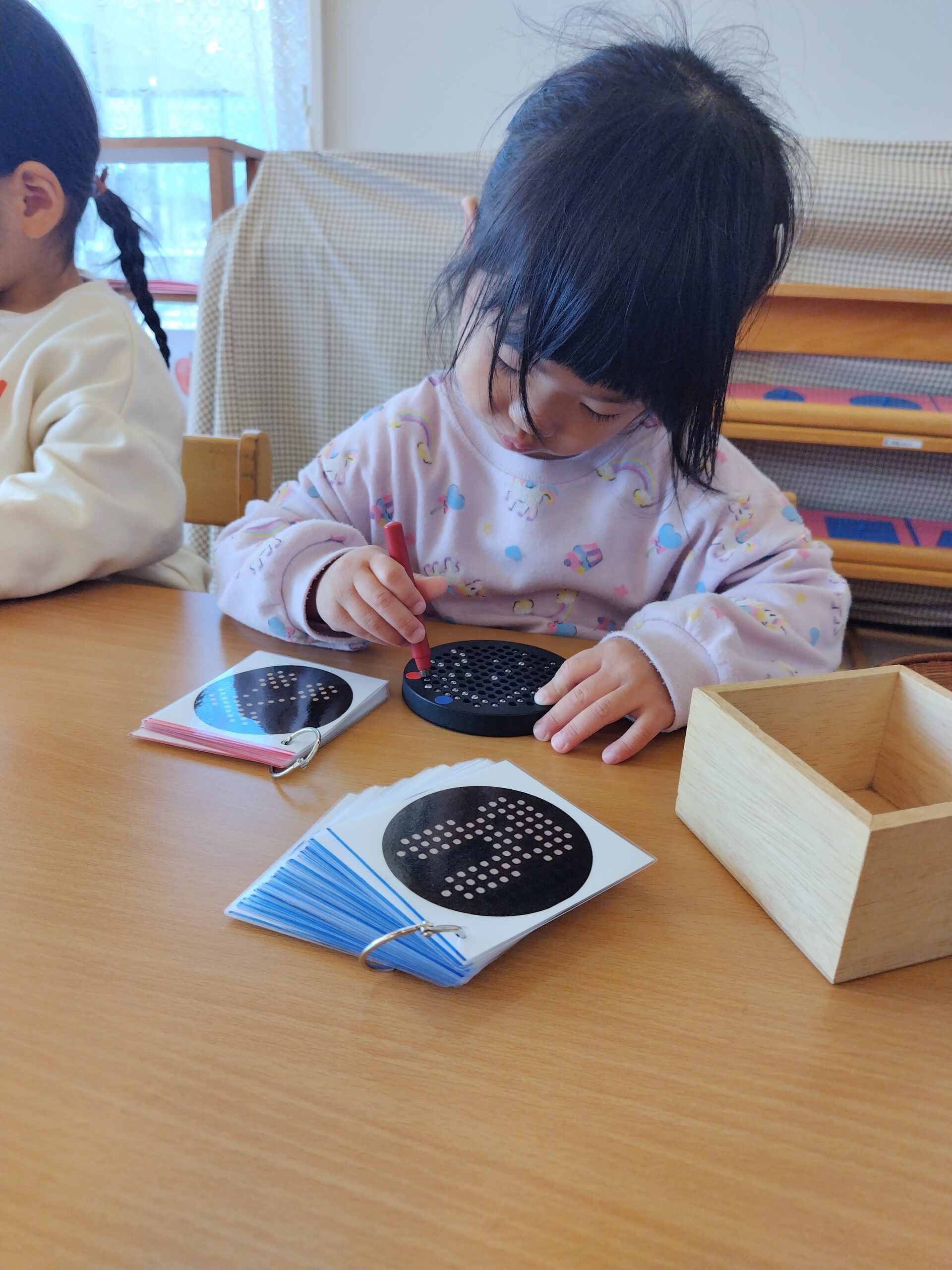
磁石で模様作り 2歳児
Making patterns using magnets 2 year old class
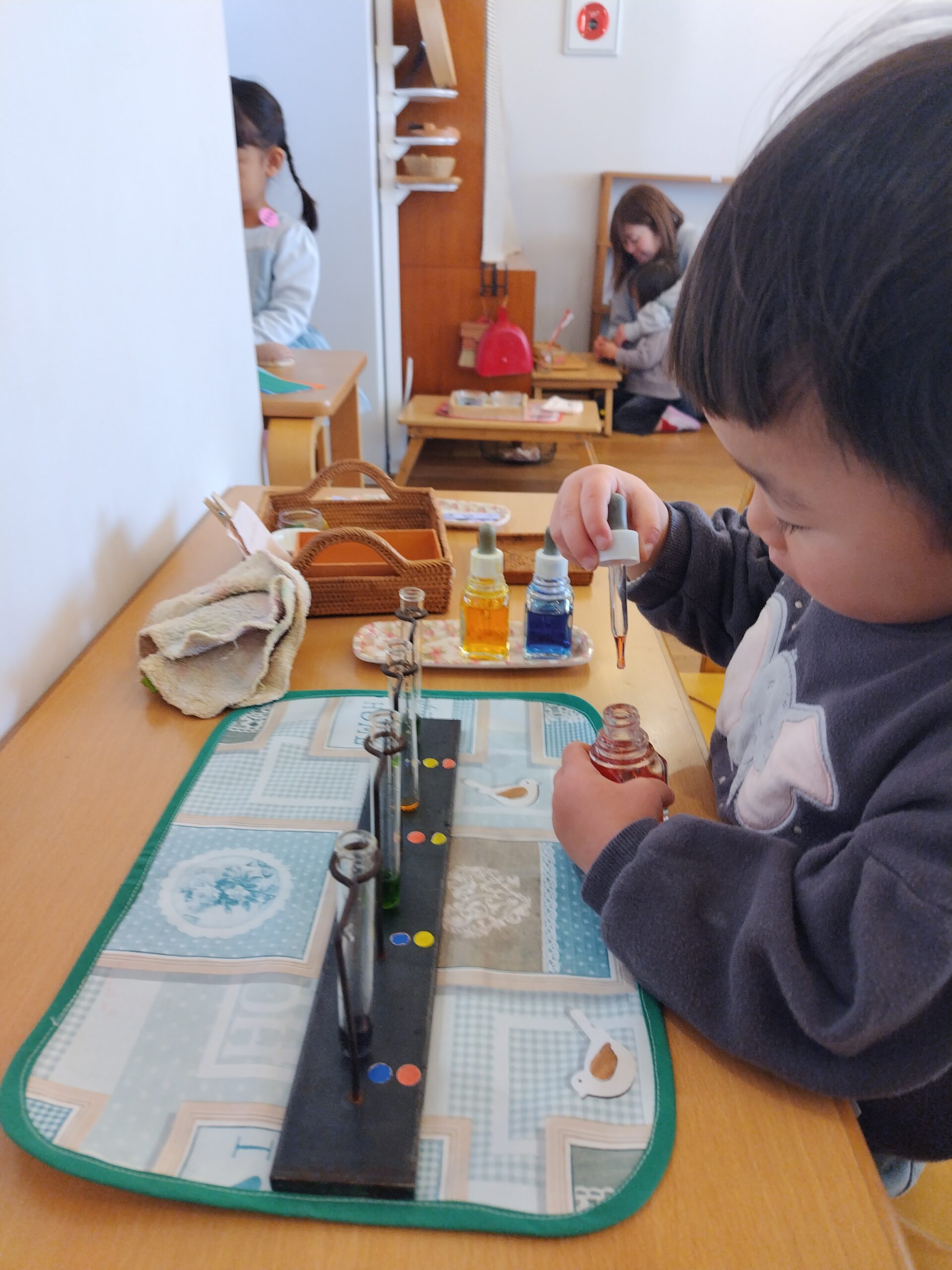
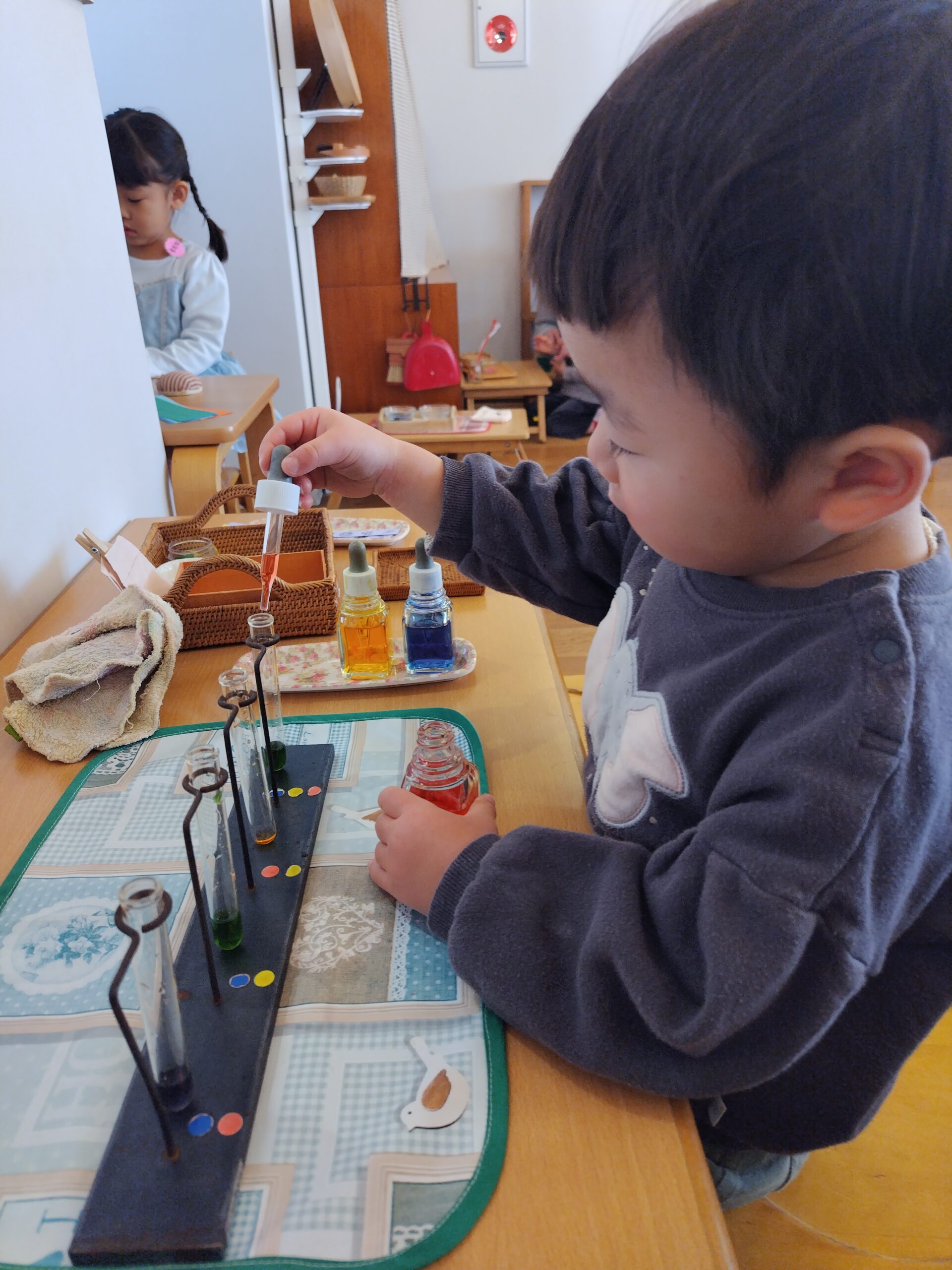
スポイトの混色 2歳児
Mixing cloros with dropper 2 year old class
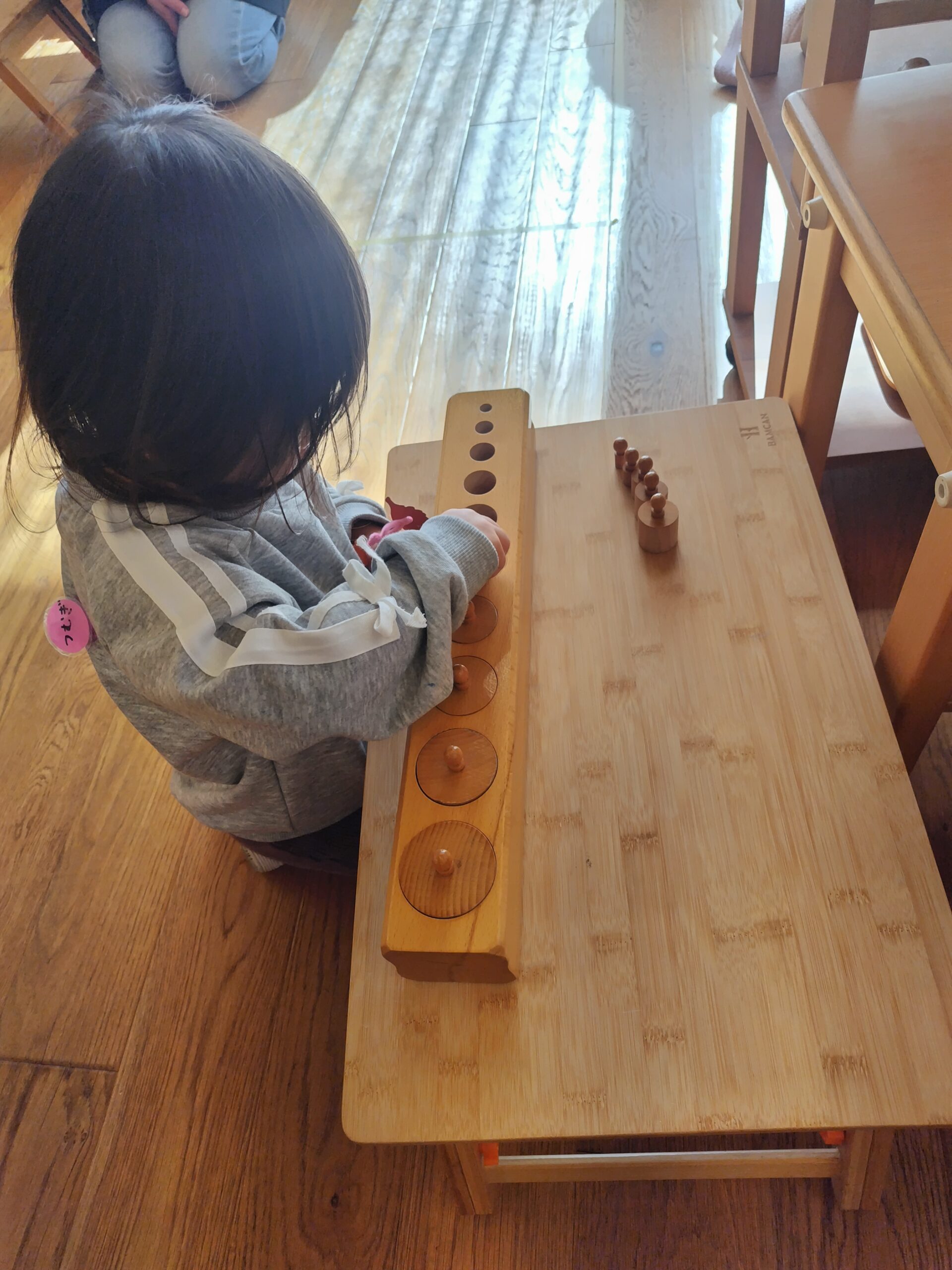
はめこみ円柱 2歳児
Cylinder fitting 2 year old class
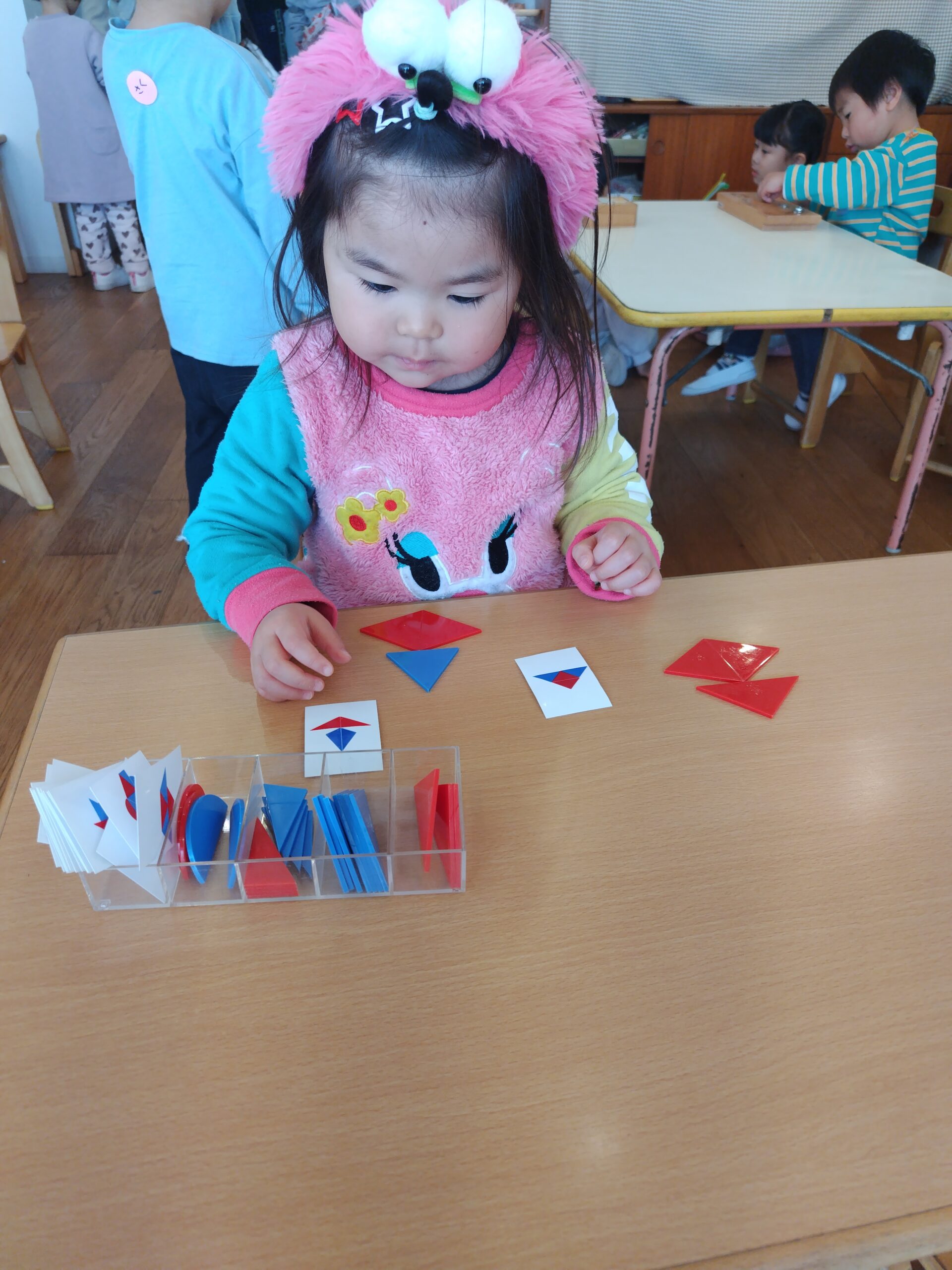
三角形を合わせて形づくり
2歳児
Making shapes with triangles 2 year old class
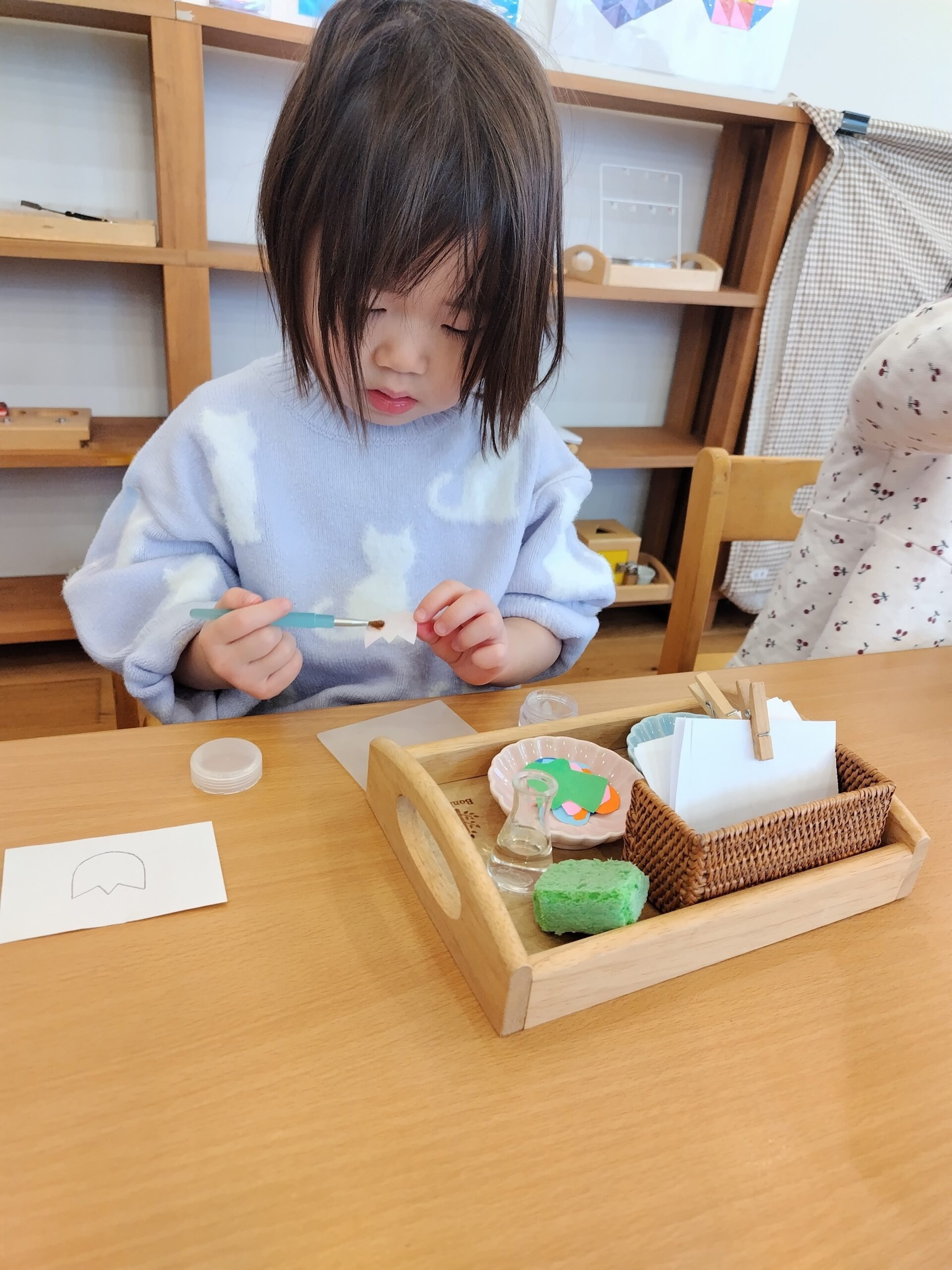
のりはり 2歳児
Glueing 2 year old class
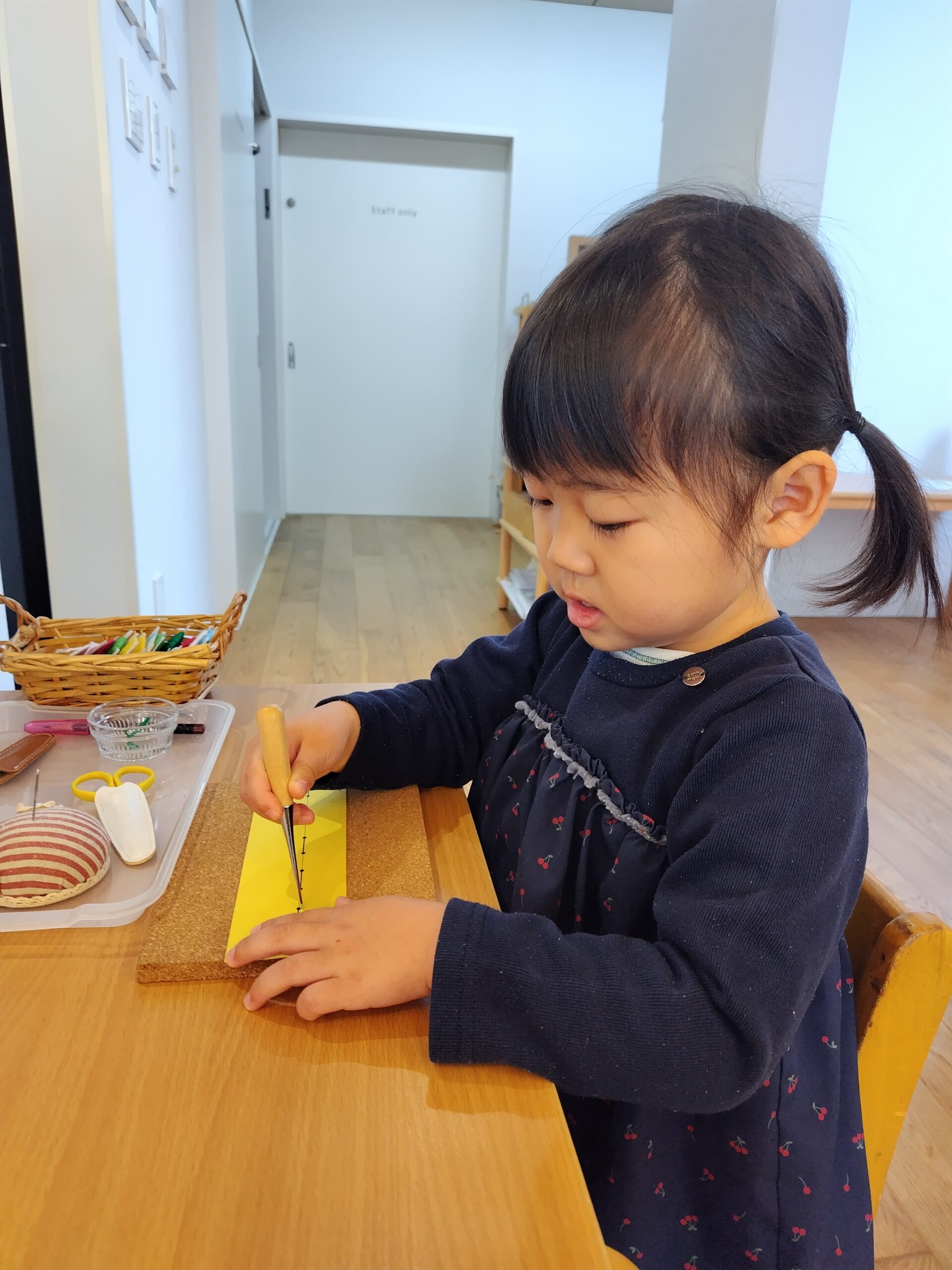
縫いさし 2歳児
Sewing 2 year old class
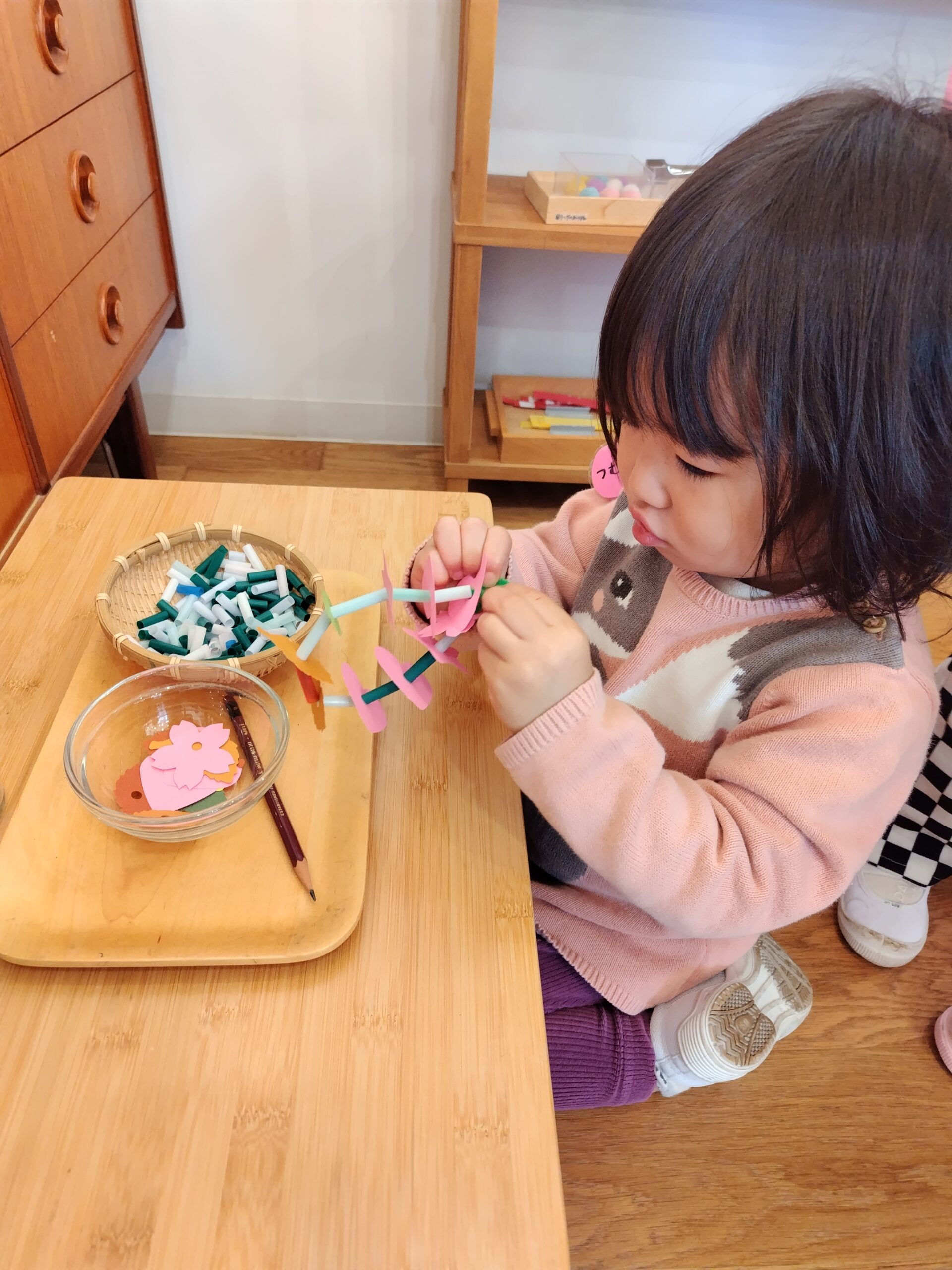
ストロー通し 2歳児
Straw passing 2 year old class
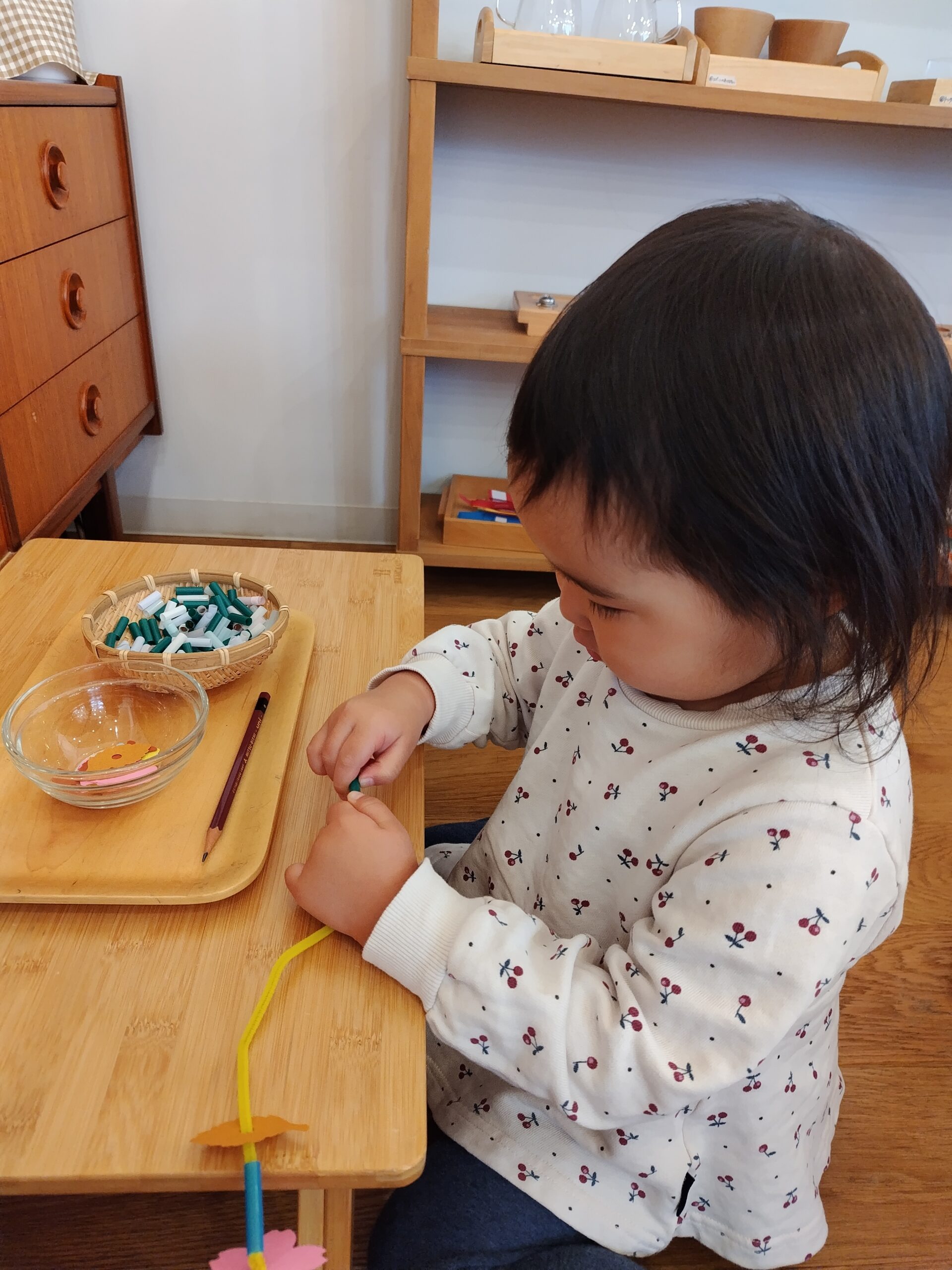
ストロー通し 2歳児
Straw passing 2 year old class
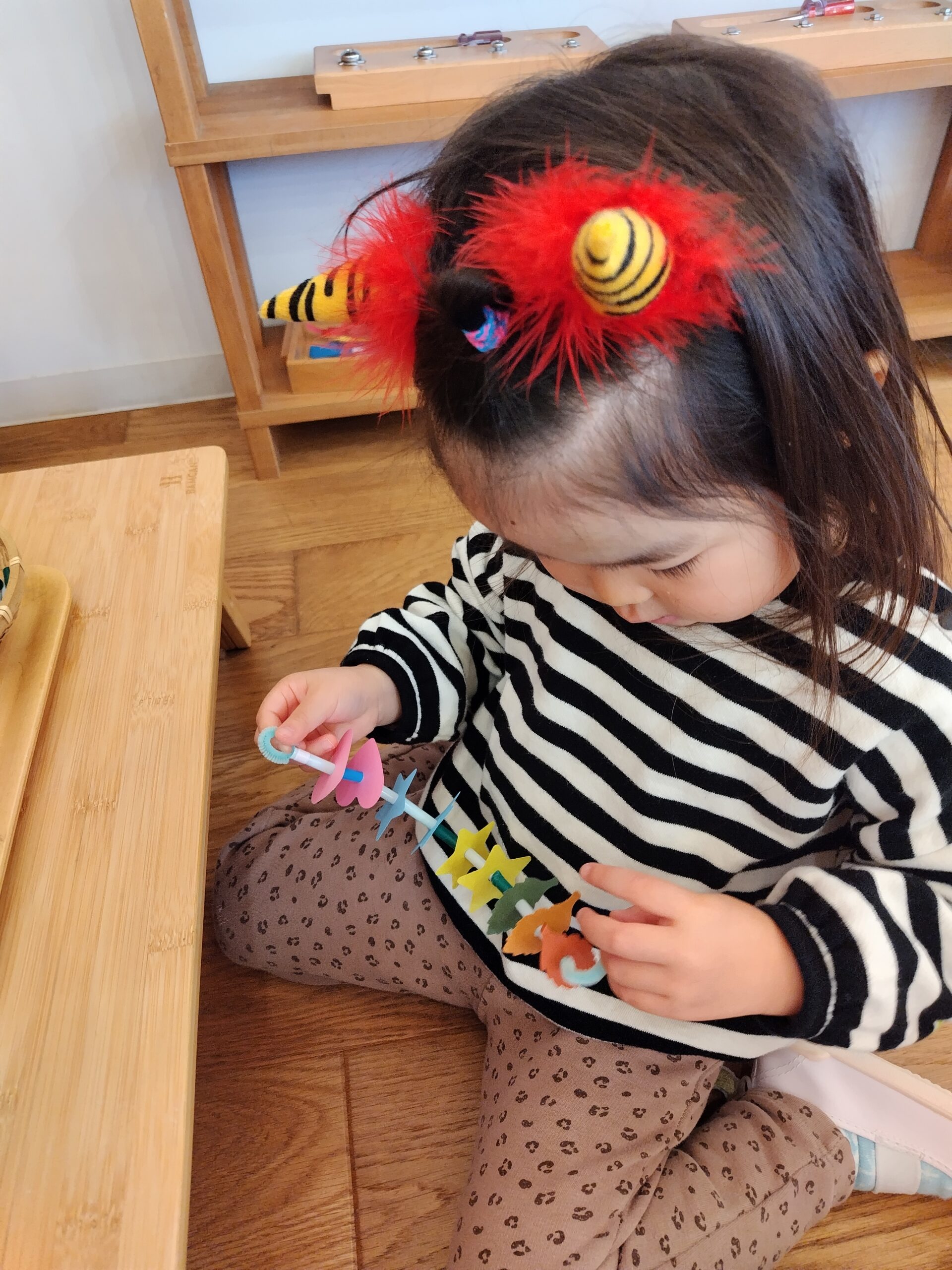
ストロー通し 2歳児
Straw passing 2 year old class
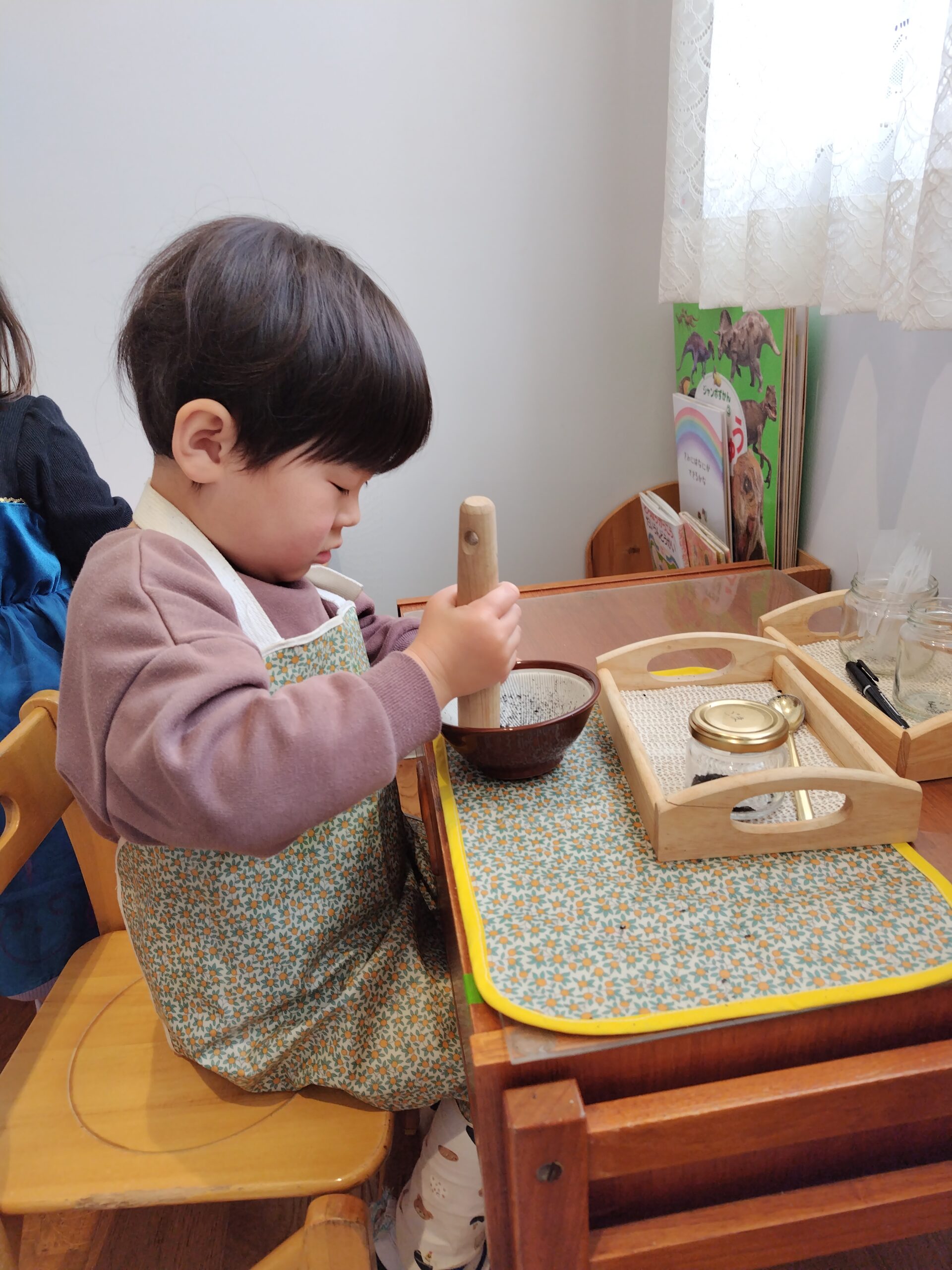
ごますり 2歳児
Sesame grinding 2 year old class
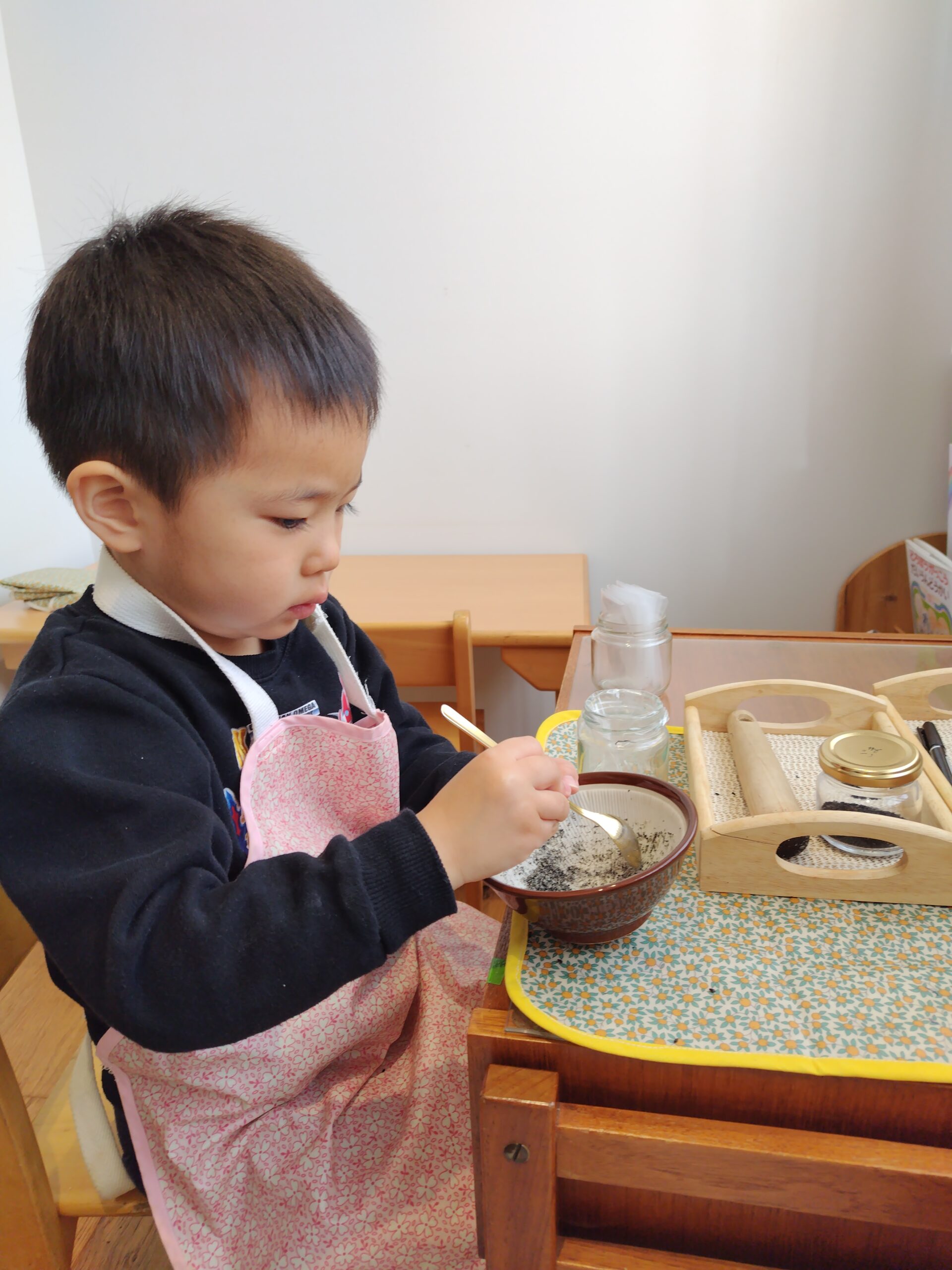
ごますり 2歳児
Sesame grinding 2 year old class
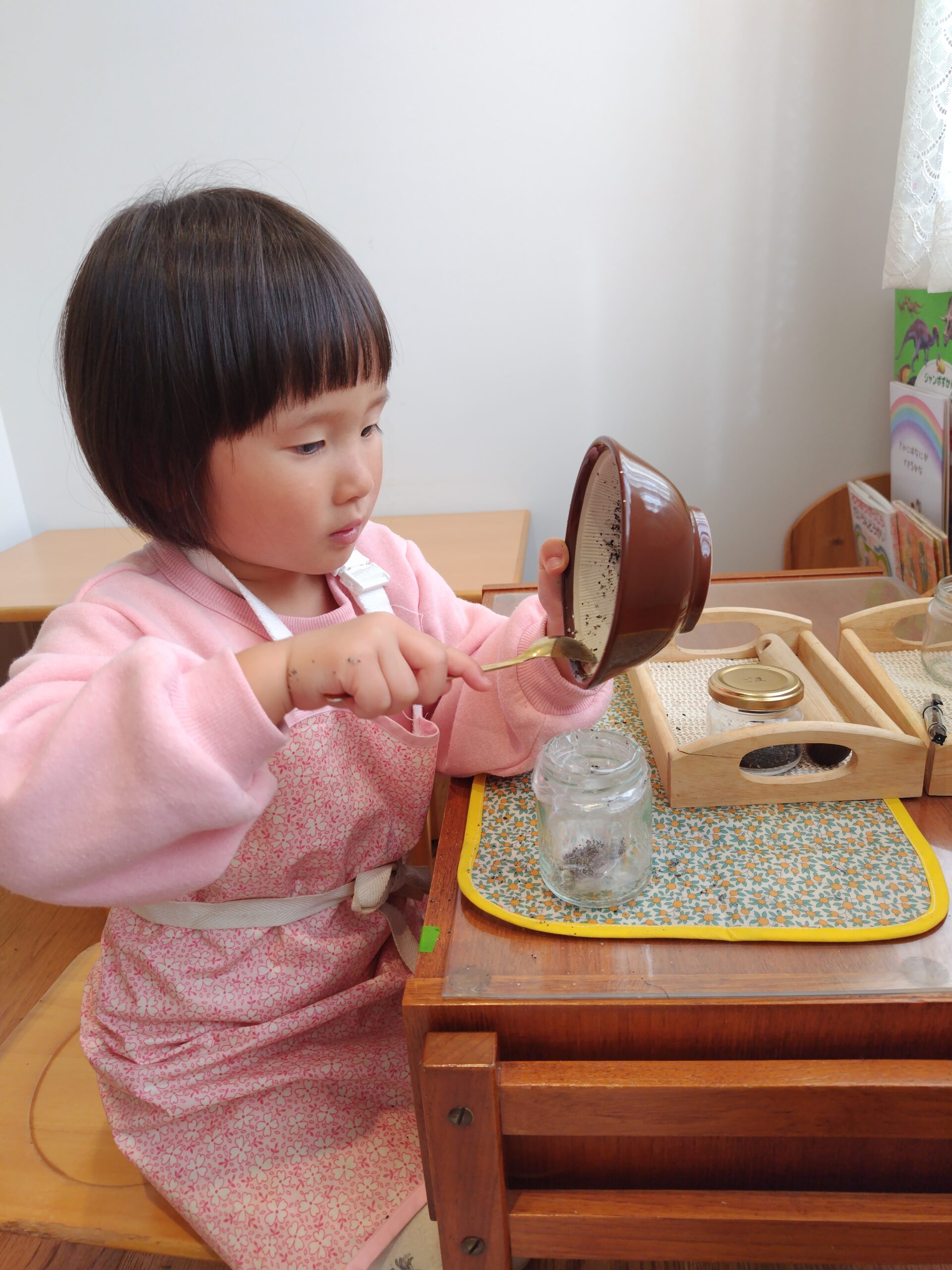
ごますり 2歳児
Sesame grinding 2 year old class
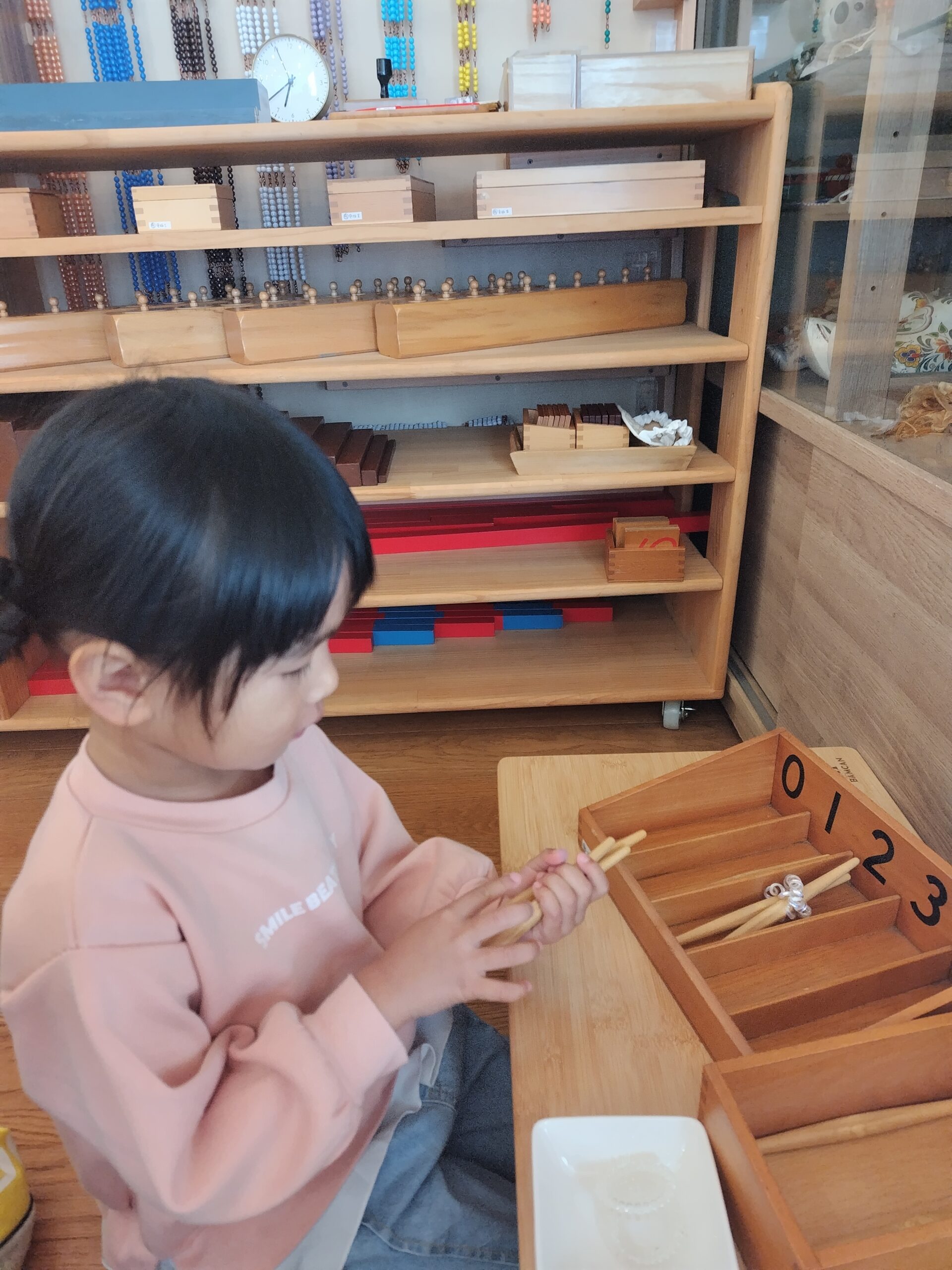
紡棒箱 2歳児
Spindle box 2 year old class
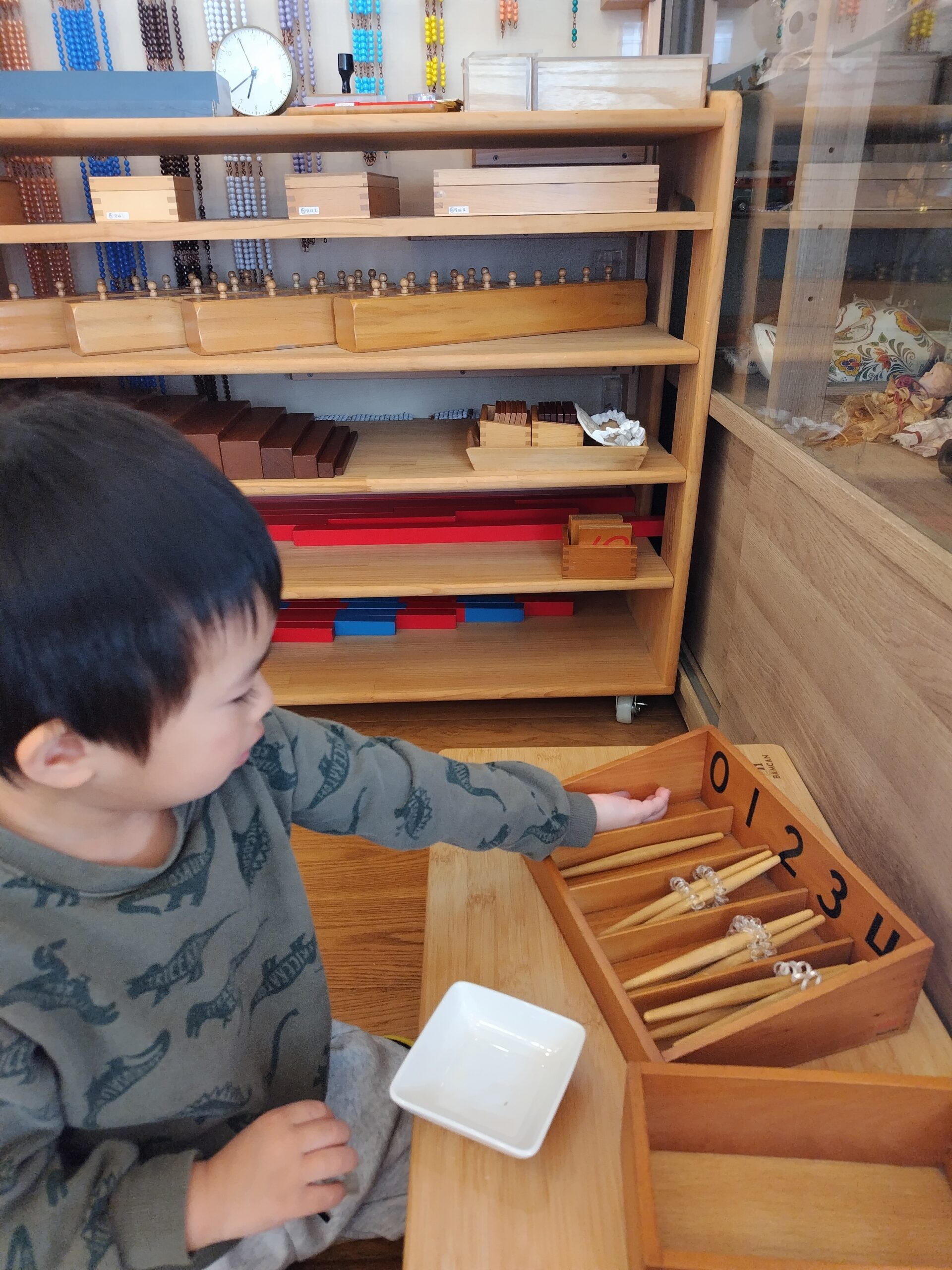
紡棒箱 2歳児
「0は何もないねえ」
Spindle box 2 year old class
"There is nothing in the Zero spot"
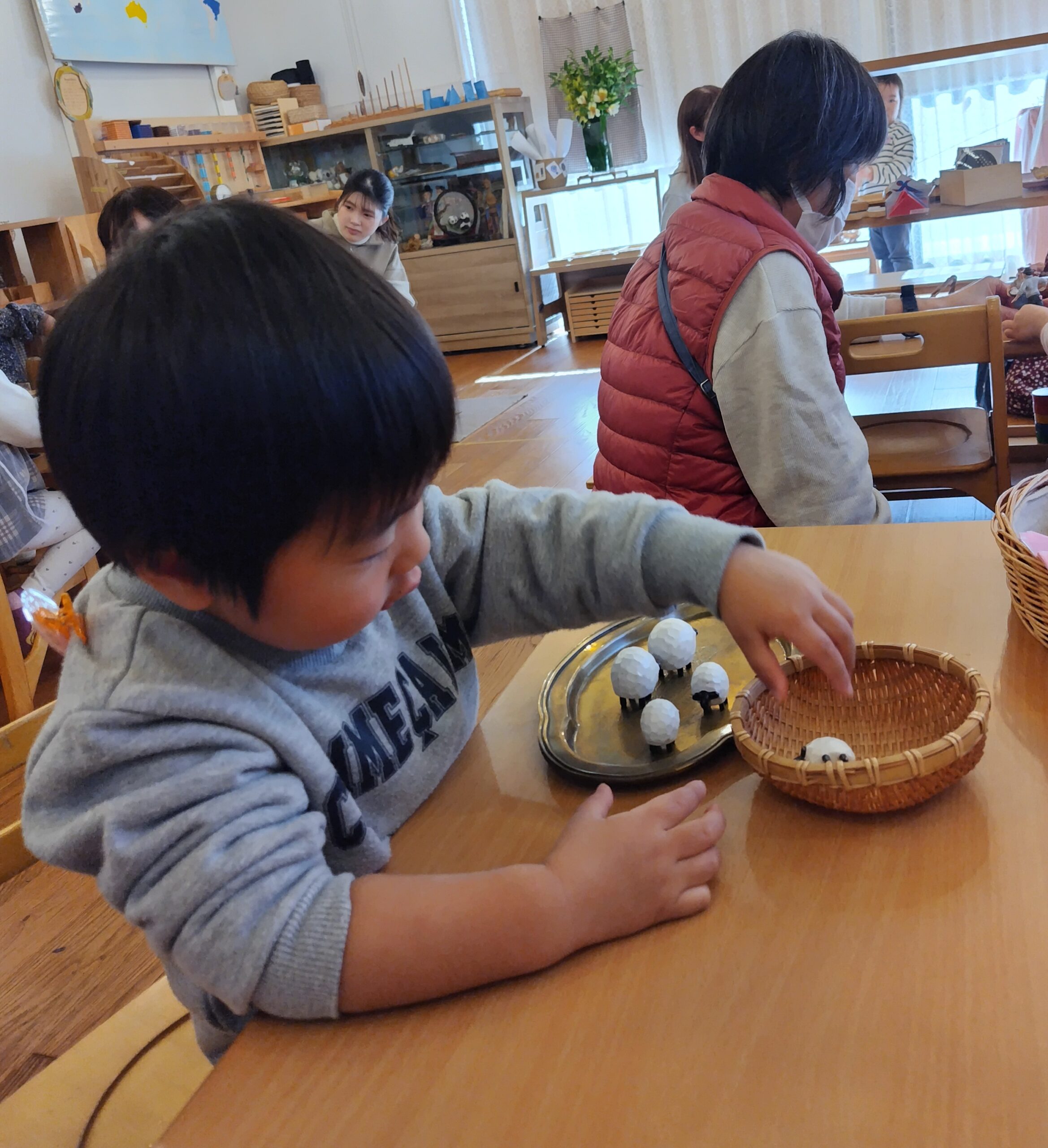
静寂の練習 2歳児
The silence game 2 year old class
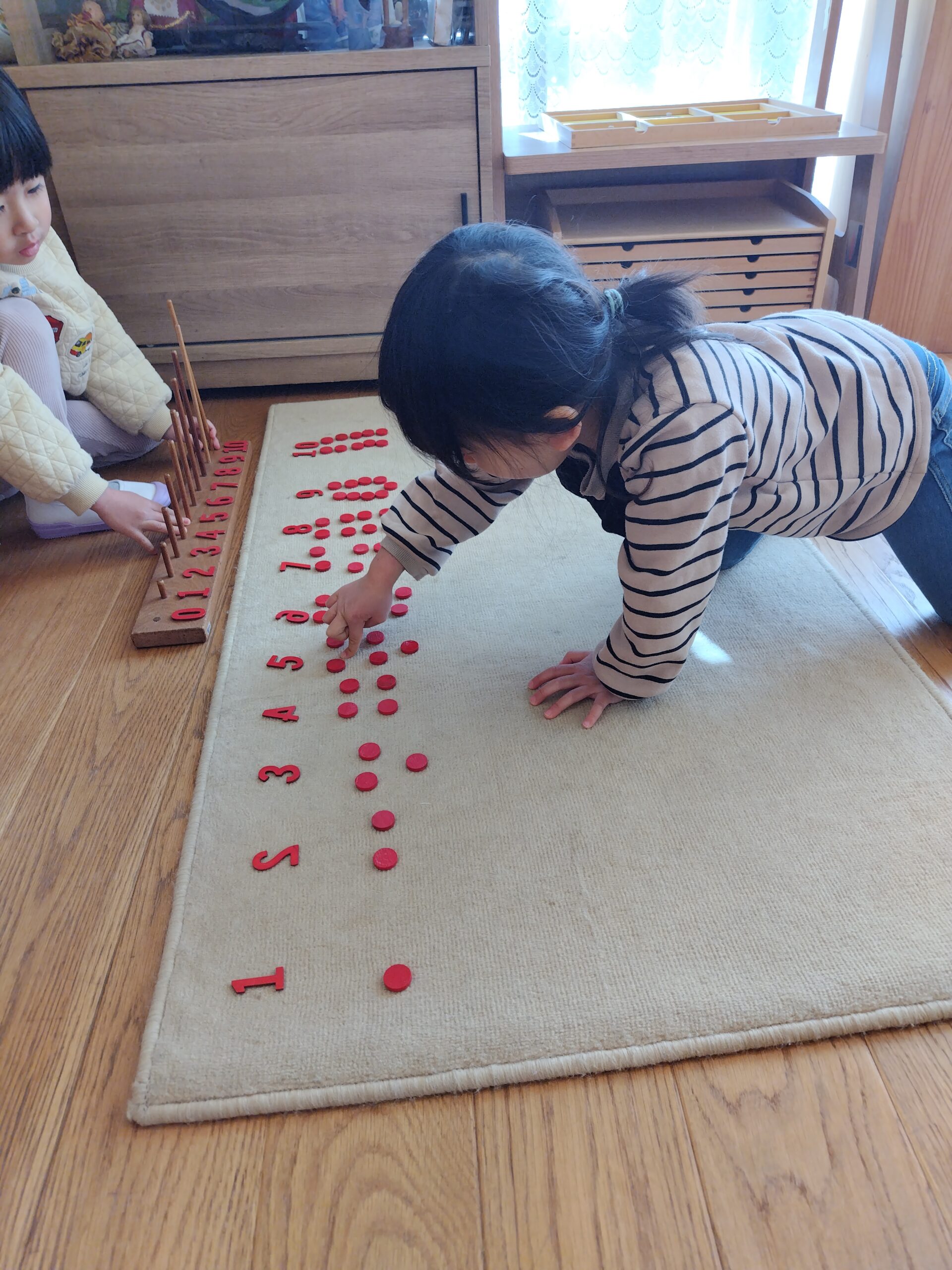
数字と玉 3歳児
Numbers and balls 3 year old class
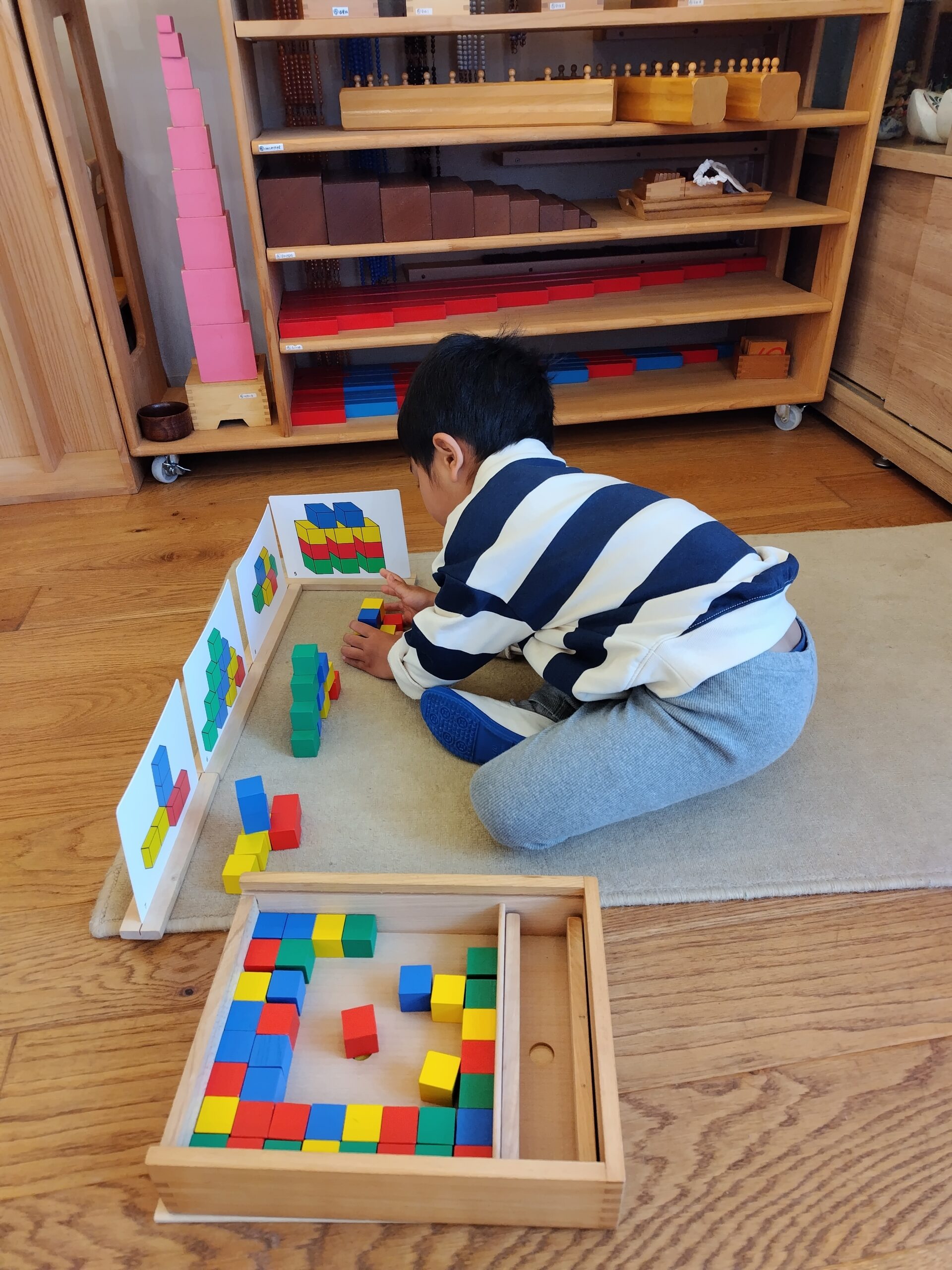
立方体の積み木 3歳児
Cube blocks 3 year old class
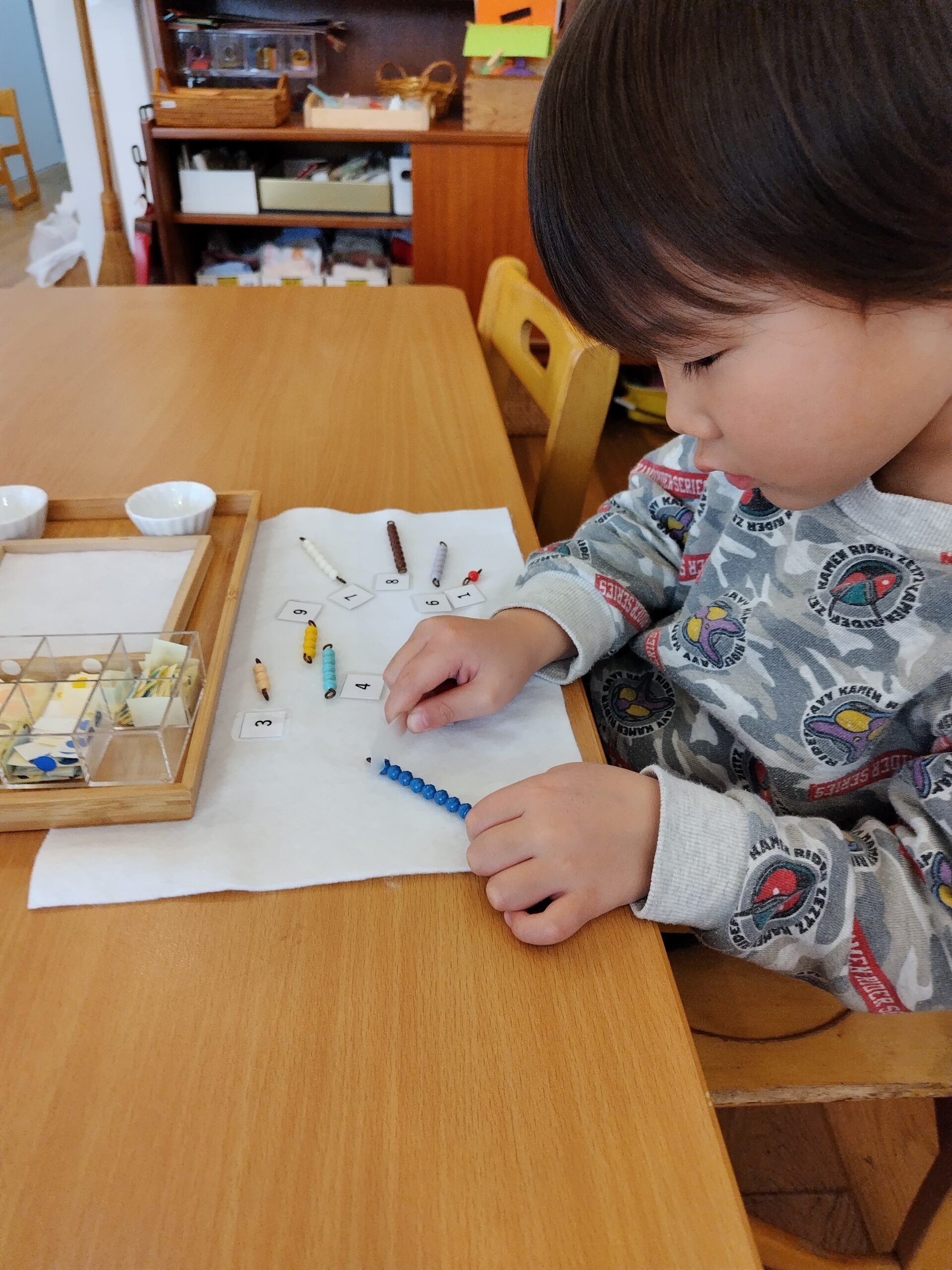
数の色ビーズ 3歳児
Numbers beads 3 year old class
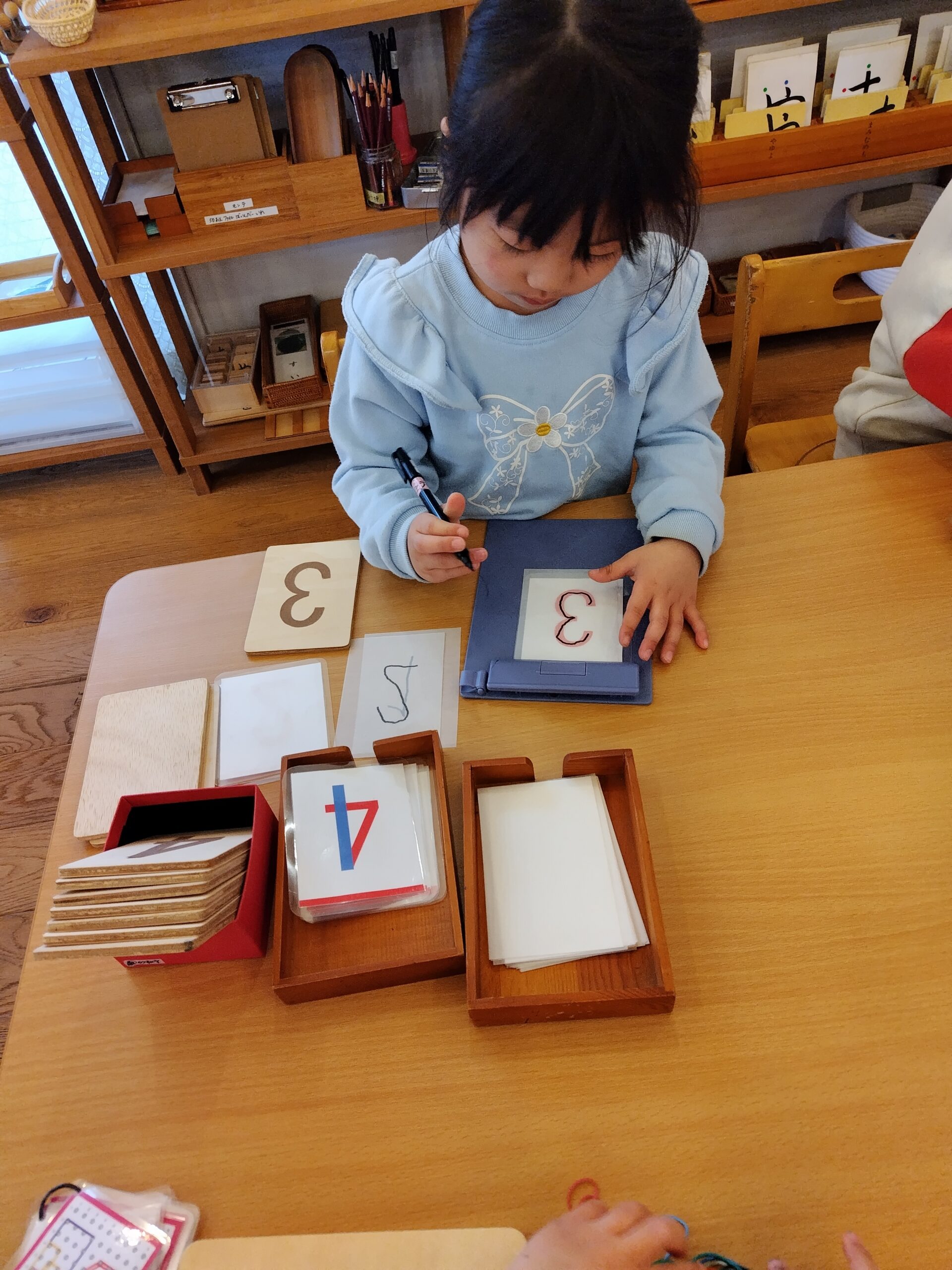
数字の写し書き 3歳児
Tracing numbers 3 year old class
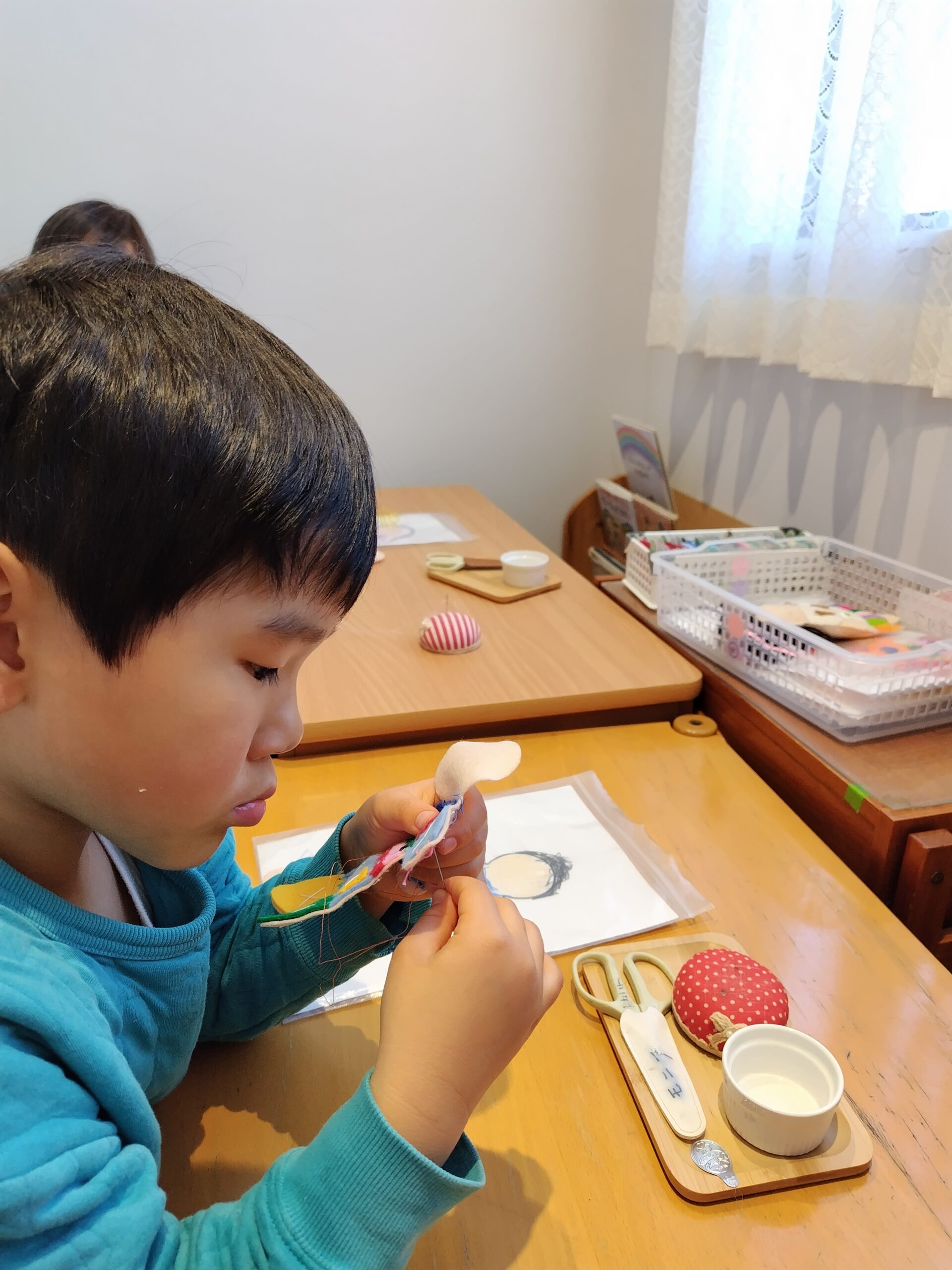
縫いさし(フェルト人形)4歳児
Sewing (felt doll) 4 year old class
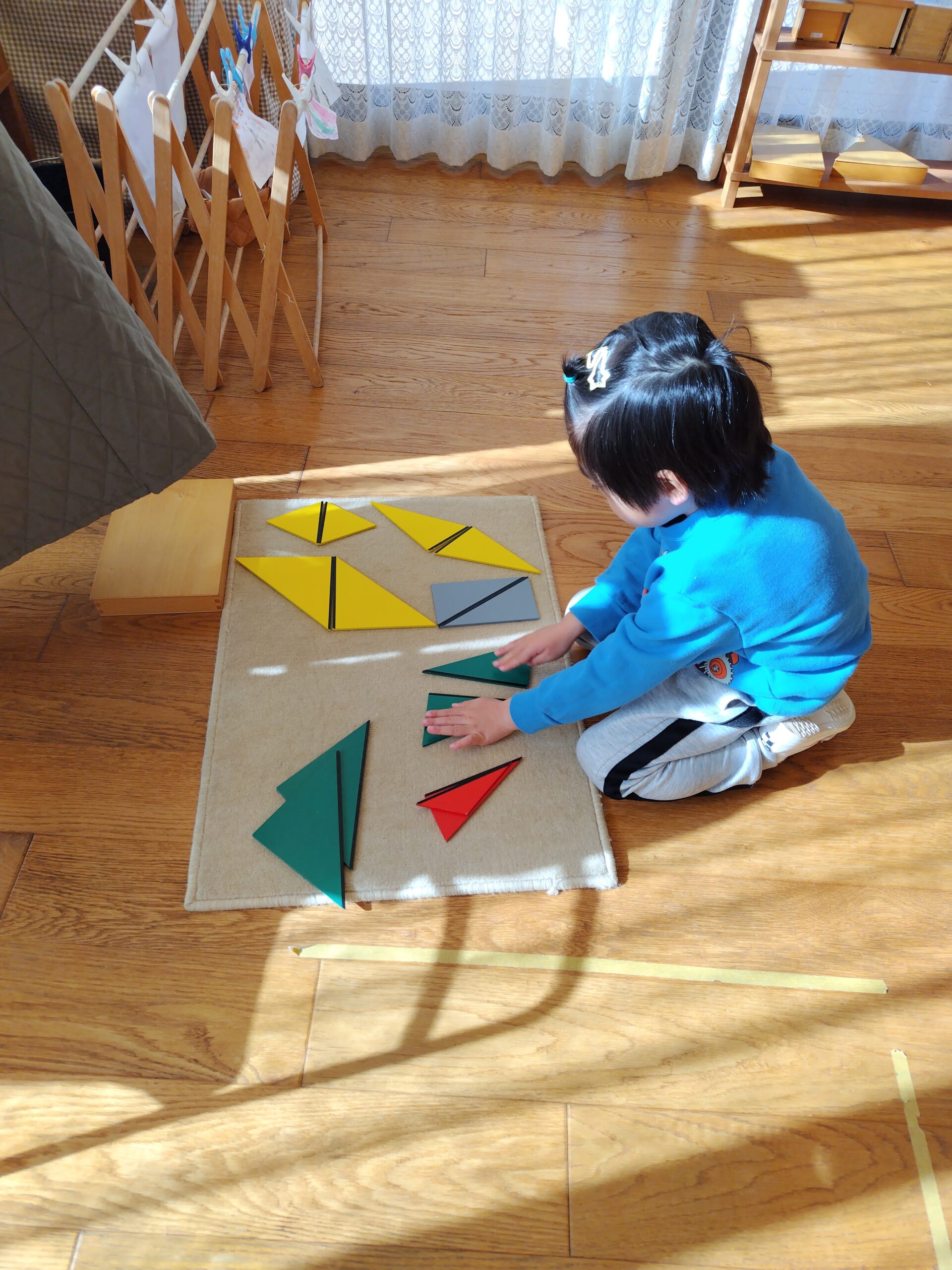
長方形の箱Ⅰ 4歳児
Rectangular box 1 4 year old class
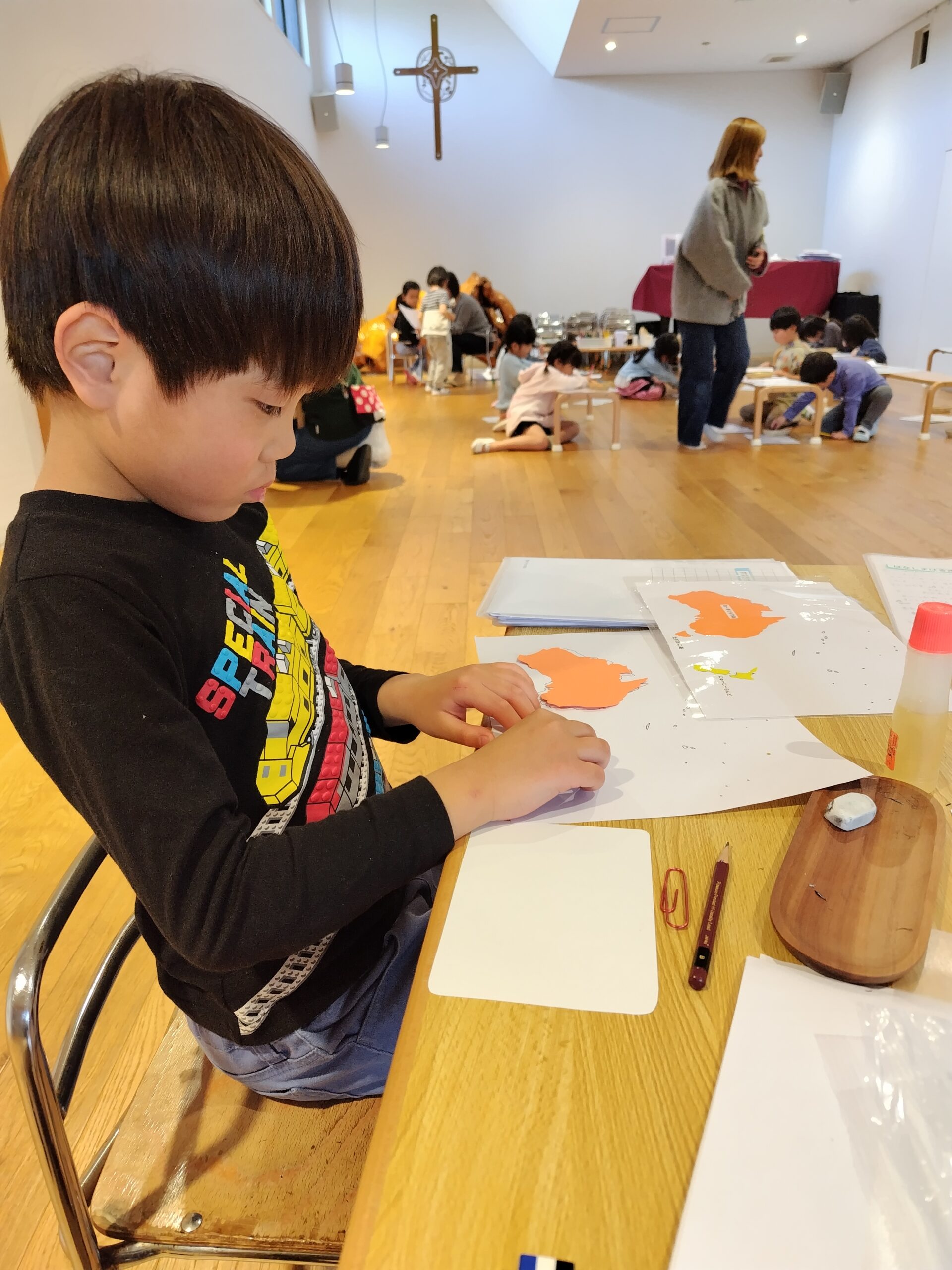
世界地図 5歳児
World map 5 year old class
先日、アクアさん(2歳児)でスポイトの活動をしている子が
いました。
スポイトを使うには、ビンの色水をスポイトで吸い、ビンからスポイトをまわして離し、
スポイトの色水を試験管へ入れます。
ところが、ビンを左手で押さえて右手でスポイトを持ちますが、
どうしてもまわすことができません。
大人にはビンの蓋を開けることは簡単なことかもしれませんが、
経験のない子には、腕の動かし方、力をどう入れたら良いのかわからないのです。
その日は、一連のスポイトの活動を大人がゆっくり行うのを見てもらいました。
後日、その子はねじまわしに自分から取り組み、ドライバーをまわすことができました。
自分でまわすという動きができるようになりたい!=自立への一歩を感じました。
そして、手を使った様々な経験により、現在では1人でスポイトの活動が
できるようになりましたよ。
モンテッソーリの子育て おとなが子どもにできること 学研教育出版
では、こんなことが書かれています。
『勉強ができることは すべての基本と考え、子どもを良い学校にいれることに
一生懸命になる大人は少なくありません。そしてこの目的を果たす為に
「その子の発達の時間割」を無視して、早くから字を教え込んだり、
計算を覚えさせたりといった間違った知育に走ってしまうことが
あります。さらに、教えたことを、子どもが理解したり、覚えたりできなければ
叱りつけるという恐ろしい教育が始まるのです。
子どもは本来知りたがりで、学びたがりであるにも関わらず、
自分が知りたいと思わないことを教えられ、覚えさせられることで、
子どもが学ぶことに消極的になる、あるいは学ぶことが嫌いになる日がくるのは
遠い先のことではありません。子どもは教え込まれてできるようになる
のではなく、「やりたい」と思って自発的に取り組み、自分の力でやりきることに
よって、すべてのことを学び成長していくのです。』
この文章を見ると、目の前にいる子どもが今、何に興味をもっているのか、
私たちは良く子どもを見て、観察する大切さを痛感します。
The other day, there was a child in the Aqua class (2-year-olds) who was working on a dropper activity.
To use the dropper, the child first sucks colored water from a bottle using the dropper, then turns the dropper away from the bottle and releases it, and finally transfers the colored water from the dropper into a test tube.
However, although the child holds the bottle with the left hand and the dropper with the right hand, they simply cannot rotate it.
For adults, opening the lid of a bottle may be very easy. But for a child without that experience, they do not know how to move their arms or how much force to apply.
That day, we had the child watch as an adult slowly demonstrated the entire sequence of the dropper activity.
Later on, the child voluntarily tried a screw-turning activity and was able to turn a screwdriver.
They wanted to become able to perform the motion of turning by themselves! We felt that it was a step toward independence.
Then, through various experiences using their hands, the child can now do the dropper activity independently.
In the book Montessori Parenting: What Adults Can Do for Children (Gakken Educational Publishing), the following is written:
“Many adults believe that academic ability is the foundation of everything, and they devote themselves to getting their children into good schools. In order to achieve this goal, they sometimes ignore ‘the child’s developmental timetable’ and rush into misguided educational practices—such as forcing children to learn letters early or memorizing calculations.
Furthermore, if the child cannot understand or remember what has been taught, a frightening form of education may begin in which the child is scolded.
Children are naturally curious and eager to learn. However, when they are taught things they themselves do not wish to know and are forced to memorize them, the day will not be far away when they become reluctant to learn—or even begin to dislike learning.
Children do not become capable simply by being taught. Rather, they learn and grow through wanting to do something themselves, voluntarily engaging in it, and completing it through their own effort.”
Reading this passage makes us strongly realize how important it is for us to carefully watch and observe the children in front of us—so that we can understand what they are interested in right now.